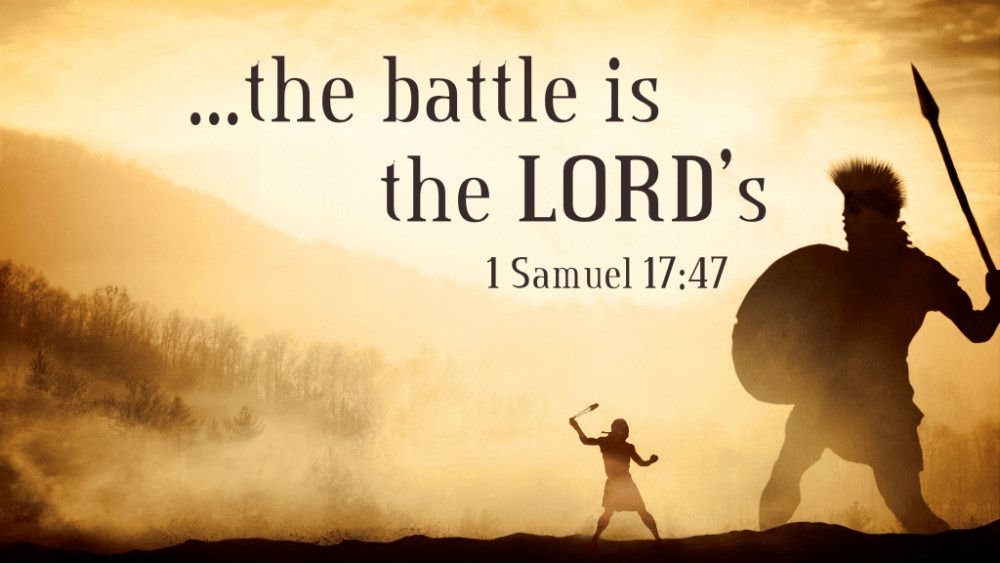
We discussed the story of David and Goliath this past Sunday. Today, it describes an underdog facing an unbeatable opponent, whether in sports or business. This story helps us think about the battles Christians face.
Some preachers have said, "You are not David in the story," as a response to sermons that focus on defeating the giants in your life. While we all face challenges and need courage, the story is really about David fighting the Lord’s enemy, not just his enemies. David is zealous for the Lord's name, and we should be, too. David is a Christ-like figure in Scripture; Jesus is called the son of David. By defeating Goliath, David points to one person representing the people defeating God’s enemy. We undercut this passage if we only see Christ’s work of justification in David’s defeat of Goliath. It’s helpful to see our connection to Christ as a union with him. Saul was afraid, but David was bold because God’s Spirit was with him. We look to Jesus, who has already won the greatest battle. The main victory has happened (as in WWII when D-Day occurred), but we still face struggles along the way until our final victory (V-E Day).
We are like David because the Holy Spirit lives in us, enabling us to engage in Spiritual warfare as the Lord’s army. In Ezekiel 37, the valley of dry bones shows how Israel was completely lost and hopeless during exile. God tells Ezekiel to speak to the wind, and then God’s Spirit brings the bones to life, turning a graveyard into an army. In Revelation 11, the beast kills the two witnesses, and their bodies lie in the street while their enemies celebrate. It looks like defeat. But after three and a half days, “the breath of life from God entered them, and they stood on their feet.”
In all three stories, the Holy Spirit moves powerfully in God’s people to fight a spiritual battle. But how are we to fight?
Just as David faced Goliath and knew, "The battle is the Lord's," and fought spiritually, trusting in the Lord (1 Samuel 17:47), so are we, as Paul states in Ephesians 6, to use spiritual tools. Some of them are the Shield of Faith and the Sword of the Spirit. One aspect of spiritual battle is that our enemy, Satan, is an “accuser of the brethren" (Revelation 12:10). He suggests shame about past mistakes. He increases anxiety and intimidation to paralyze trust in God's sovereignty. It is critical to distinguish between conviction and condemnation. The Holy Spirit and the enemy always speak differently.
The Holy Spirit conviction focuses on specific actions you can repent of and heal from, is gentle and loving, and draws you closer to God and others.
Enemy condemnation attacks who you are with criticism: "You are a failure." The enemy brings up past sins God forgave, and isolates and shames you. Shame makes you hide from God and others, leaving you vulnerable.
Scripture encourages you to take every thought captive by asking where it comes from. Discern the enemies’ arrows, often filled with shame-based thoughts rather than truth. Call out the lie and meditate on the truth of God’s word: There is therefore now no condemnation for those who are in Christ Jesus (Romans 8:1).